



Game info
Football, Sports puzzle, Skill
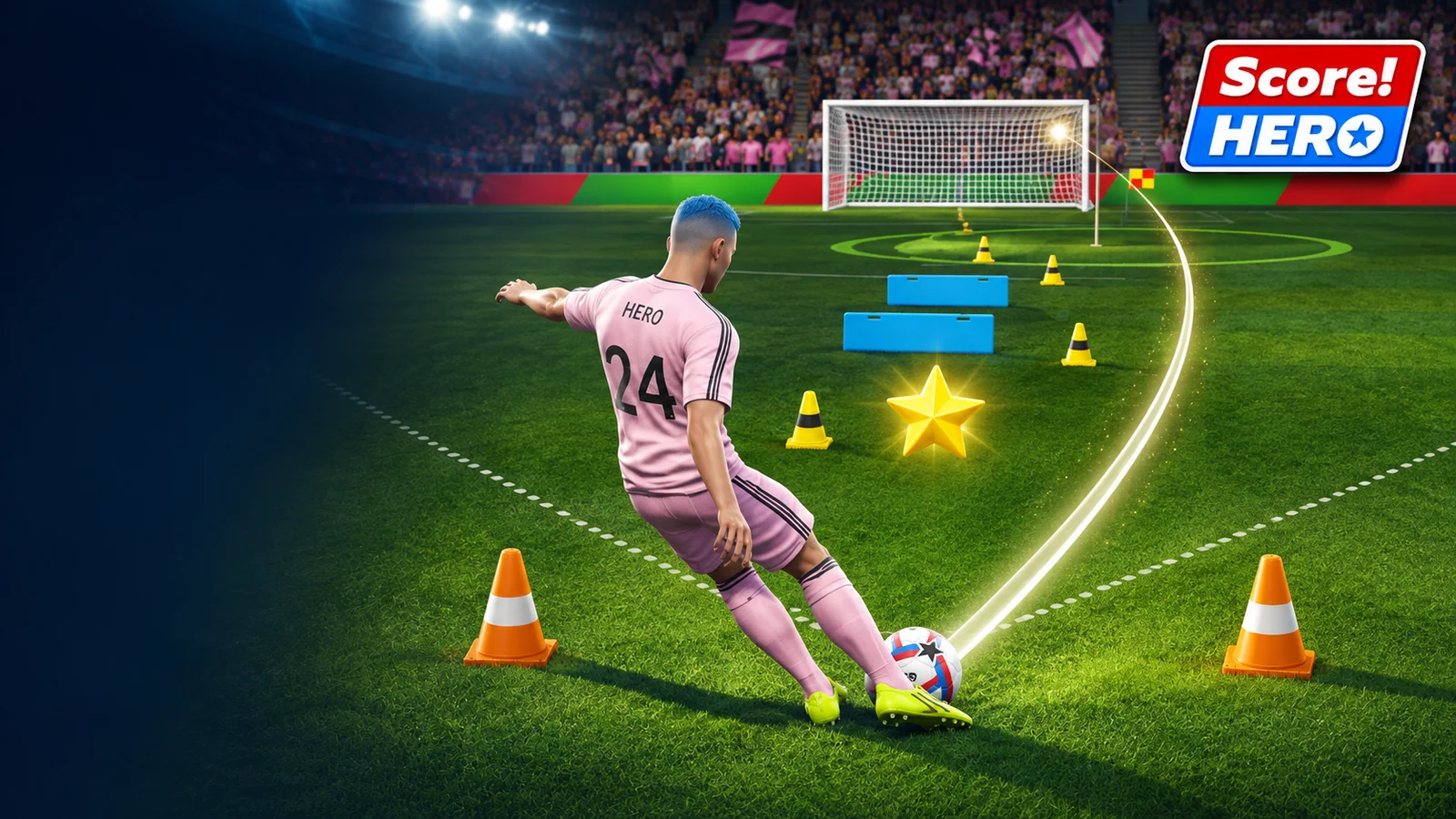
Score! Hero presents football as a series of decisive attacking situations. Instead of controlling every second of a full match, the player draws passes and shots that move a short scenario towards its goal.
About Score! Hero
Score! Hero presents football as a series of decisive attacking situations. Instead of controlling every second of a full match, the player draws passes and shots that move a short scenario towards its goal.

Gameplay overview
Study the players, defenders and goalkeeper, then draw the ball’s path. A successful pass creates another decision in the attacking sequence. The challenge is to find a route that is both reachable and useful for the next action, rather than drawing directly at goal every time.
How to Play
Look beyond the immediate receiver. A safe pass that leaves the next player facing a blocked goal may be worse than a slightly wider route. Watch the goalkeeper’s position and the angle from which the ball will arrive. When replaying, change one line or target at a time so you can understand why a sequence succeeds.
Controls
Official mobile game: draw a pass or shot with a finger. Football browser alternatives can use dragging, mouse aiming or keyboard movement, so controls must be recorded separately.
Pro Tips
- Check the entire attacking scene before drawing.
- Use width to create a better shooting angle.
- Follow the scenario objective rather than assuming every finish needs the same target.
- Distinguish Score! Hero from the separate Score! Match app.
Making Better Decisions
Read each attacking scene as a chain rather than a single kick. The obvious receiver may be reachable but poorly placed for the next touch, while a wider pass can change the angle of the entire move. Before drawing a shot, consider the goalkeeper, the defenders between ball and goal and where the ball will travel after contact. If a retry is needed, change one part of the drawing so you can compare its effect. A different route may be more helpful than simply drawing the same pass harder or faster. Watch the scenario’s requested outcome and any additional objectives separately. Advice for a continuous-control football game can be entertaining, but it does not replace understanding Score! Hero’s short sequence of drawn decisions.
Features, Modes and Progression
firsttouchgames.story.
Work backwards from the finish
Before drawing a pass or shot, look at the position the next player will receive it in. A line that reaches a teammate may still create a difficult follow-up. Compare the available angle, the defenders and the space near the intended receiver. Planning the second action can explain why an apparently accurate first action is not the most useful one. Read the current scenario’s target rather than assuming every challenge is simply about reaching the goal as quickly as possible.
Change one part of a failed sequence
If the ball does not follow the line you expected, separate the aiming problem from the decision about whom to target. Try a different curve or endpoint while keeping the overall sequence steady. When the pass itself works but the next action is awkward, choose a more useful receiving position. This gives each retry a specific question to answer.
A football career told through attacking moments
Score! Hero gives its football puzzles a career framework. The published game follows a player through important moments, team opportunities and trophy ambitions rather than asking you to control every second of a conventional match. That structure makes a single pass or finish feel like part of a longer sporting story. The next scenario gives the drawing mechanic a new tactical setting.
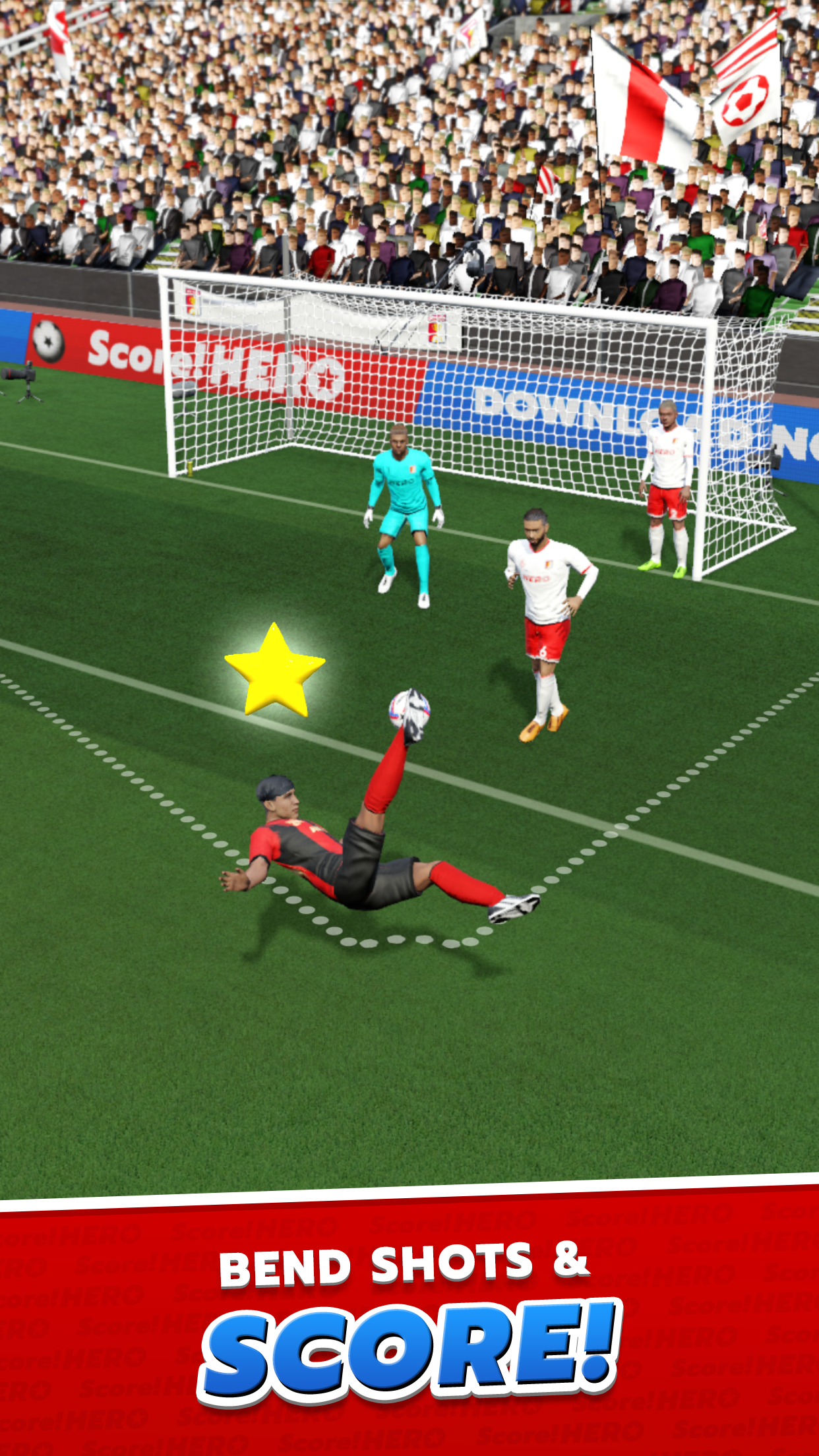
The official description presents realistic 3D football action alongside puzzle-inspired input. This combination matters because an attractive route on the pitch must still become a line the game can interpret. Look at the ball's destination, the receiving player and the intended next action before drawing. A short successful sequence is more meaningful when its role in the attack is clear.
Passing, shooting and developing the Hero
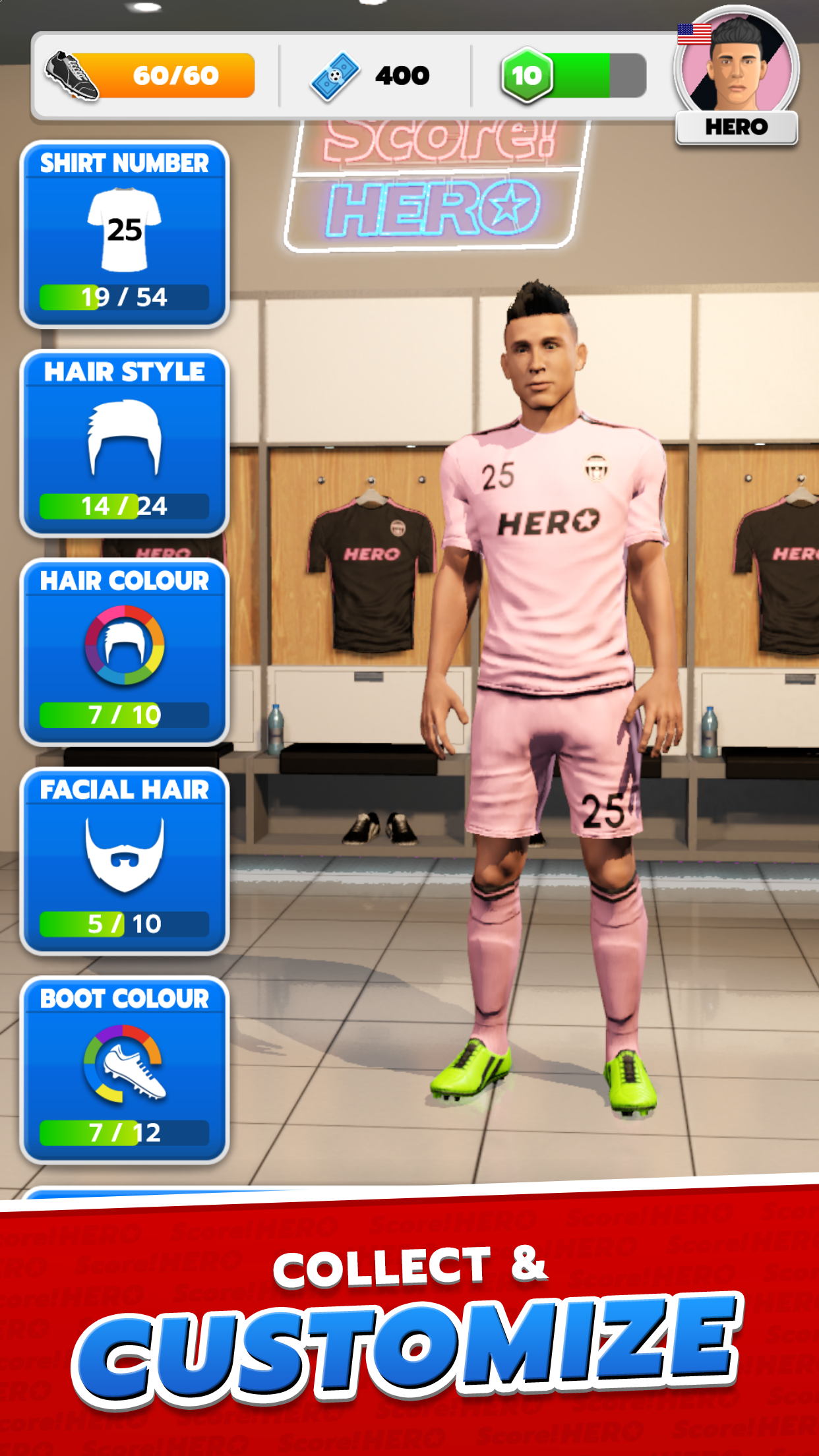
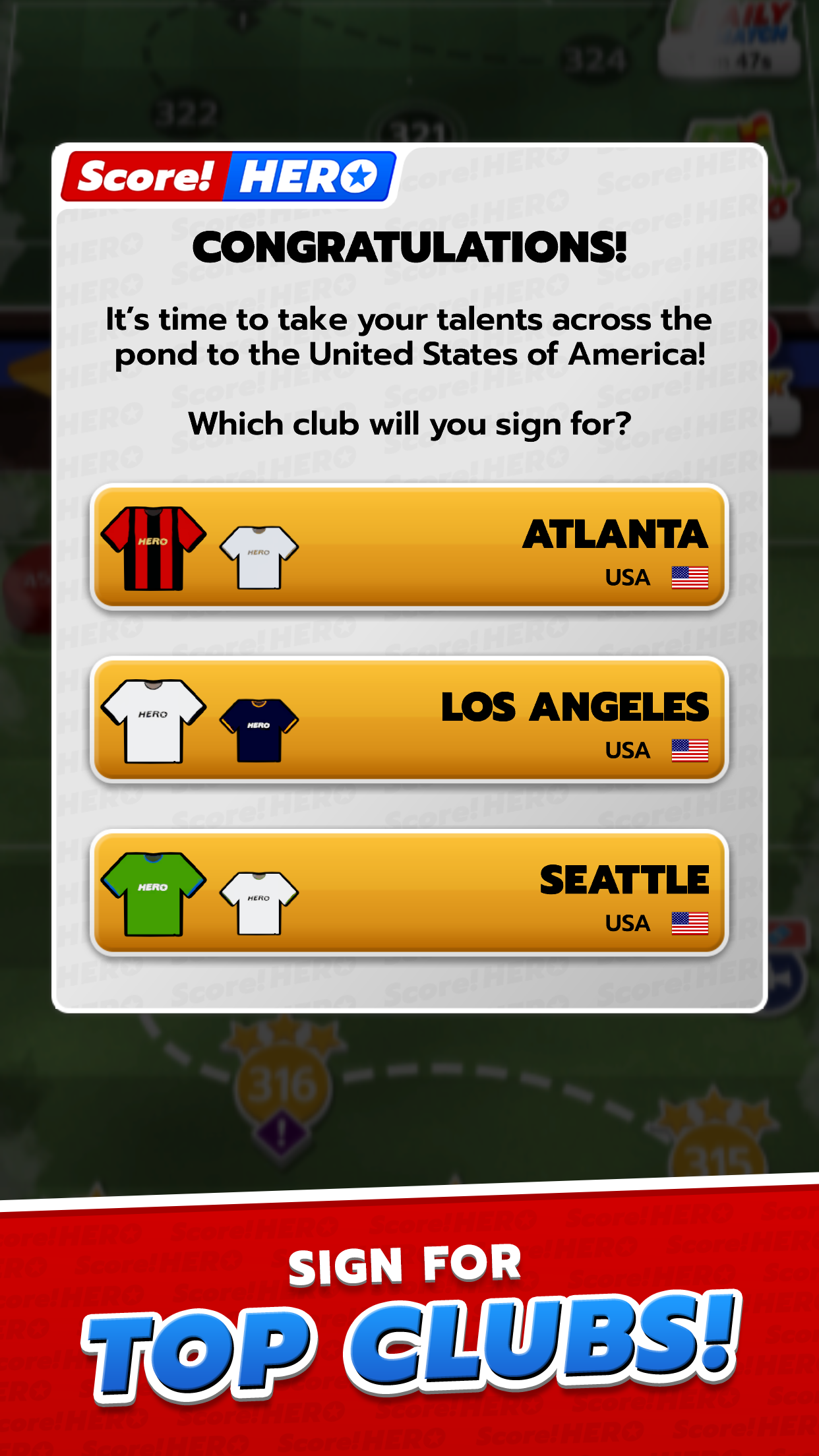
The Hero's progression and appearance give the campaign continuity, while the football situations provide the recurring decisions. Signing for a team or representing a country belongs to that career identity; it does not turn the game into a full team-management simulator. Keep the current scenario's conditions in view rather than expecting every football system from another title.
A career can be approached as a series of skills to develop: selecting a useful receiver, creating a clearer shooting angle and drawing a repeatable curve. When a later challenge is difficult, a familiar earlier action can help explain which part is new. The published product dates back to the original 2015 game and has since received changes, so the current release establishes its available scenarios and progression. Use the official First Touch Games and store links for that product information instead of a fixed old level list.
A football puzzle begins before the first pass
Score! Hero turns a football attack into a sequence of decisions about where the ball should travel. Look at the receiving player, nearby defenders and the next possible action before drawing a line. A pass that reaches a teammate can still leave the attack in an awkward position. The useful question is not only whether the ball can reach someone, but whether that player will be able to continue the move.
Read the scenario's objective before choosing an ambitious route. Some situations reward a particular kind of finish or sequence, and the most obvious shot may not address that condition. Separate the task of creating a chance from the task of finishing it. Thinking backwards from the desired final position can reveal why a simpler first pass is more useful than immediately trying the most dramatic curve.
Angles, receiving space and the next touch
A receiver's position relative to defenders matters as much as the distance of a pass. Aim for a position that makes the next decision readable. A ball delivered into a crowded area may force a difficult follow-up even when the initial line was accurate. Use the whole visible pitch to judge the route rather than focusing only on the player closest to the goal.
When a drawn path curves, consider which part of the route it is intended to avoid. Curving the ball without a purpose can make the outcome harder to compare. Try a clear endpoint and a controlled change in shape. If the first action succeeds but the second repeatedly fails, reconsider the receiving position instead of redrawing the same difficult final shot indefinitely.
Choosing between a direct shot and another pass
An open sight of goal can be tempting, but a better angle may exist after one more action. Look at the goalkeeper, defensive cover and the space available to another teammate. The extra pass is useful only if it improves the attack; moving the ball again simply to make the sequence longer can introduce another opportunity for it to break down.
Compare the risk with the scenario you are trying to complete. A straightforward finish that meets the current objective may be preferable to a difficult attempt at a more impressive goal. Once the basic sequence works, you can explore a different route deliberately. This keeps experimentation informative rather than turning every attempt into a completely different attack.
Making a retry answer one question
When an attack fails, identify the first point at which it became difficult. Was the pass intercepted, the receiving angle poor, or the shot aimed into an occupied area? Those are different problems. Change the endpoint, curve or target according to the specific failure and keep the successful parts of the sequence steady.
Try to make a retry answer a clear question. “Will the receiver have more room if the pass arrives farther from the defender?” is more useful than drawing another line at random. You can then compare the result with the previous attempt. The visual football setting is exciting, but the puzzle becomes more satisfying when you understand why a change created a better chance.
Touch input and a comfortable view of the pitch
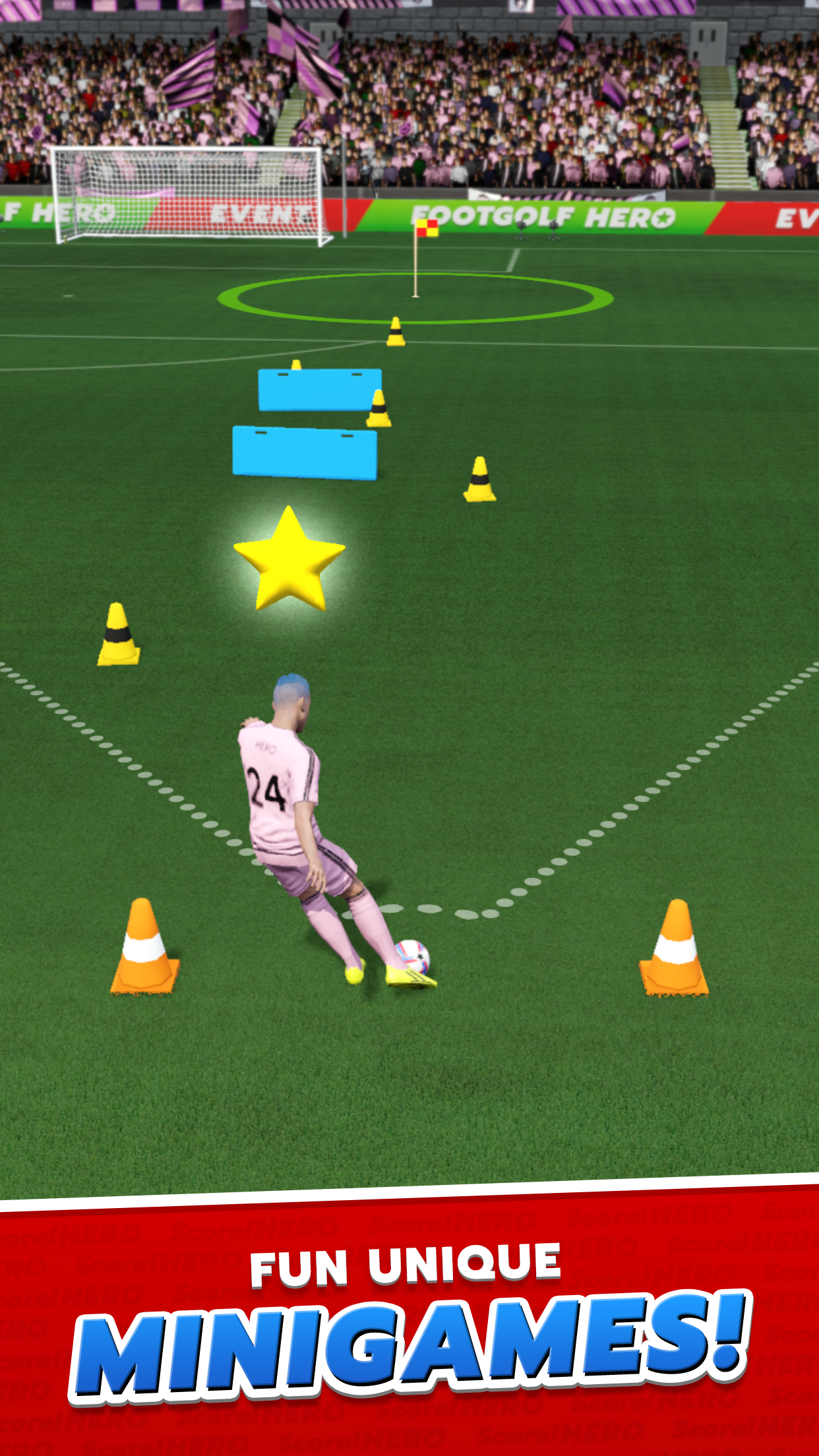
Use a screen position where you can see the intended route while drawing. Covering the receiving area with your hand can make a precise gesture unnecessarily difficult. Begin a line deliberately, keep its shape readable and check the endpoint before committing when the interface allows it. A smooth gesture is easier to reproduce than several hurried corrections.
On a larger display, make sure pointer movement feels comfortable before attempting a tight curve. The goal is to control the path, not to imitate a physical football kick with the mouse. If a sequence feels inconsistent, return to a simple pass and compare how the game interprets the drawn line. Understanding that relationship is the foundation for more ambitious attacks.
Official Score! Hero information and more football games
First Touch Games publishes Score! Hero and provides official product information. Use the published store links below for the mobile release and current device requirements. Do not assume that a character system, level number or reward described in an older article remains unchanged after an update.
If the puzzle-like passing is the appeal, choose a related football game that emphasises set pieces or aimed shots. A full match simulator asks for a different kind of attention, while an arcade scoring challenge may offer quicker repeated attempts. Score! Hero sits between those experiences by making one attack a readable problem: create space, find the right receiver and finish a sequence you can explain.
Worked example: a successful pass that creates a poor shot
Imagine that a teammate can receive the ball close to a defender or in a wider open position. The shorter route may reach the player but leave little room for the next action. Compare the receiving angle, the goal and any available follow-up before drawing the first line. The value of a pass includes the attack it makes possible, not only the fact that it reaches the intended shirt.
Try one different endpoint while keeping the receiver and general idea familiar. If the next shot becomes more readable, you have learned something about space rather than merely found a lucky line. If the pass is intercepted earlier, inspect the route itself. These are different observations and suggest different adjustments.
Worked example: a curve without a clear purpose
A curved line can avoid a defender or reach a particular receiving position. Before drawing one, identify the part of the route it is intended to change. A dramatic curve that does not solve a specific obstacle can make the result harder to compare. Start with the target and work backwards to a readable path.
When the shot almost works, adjust one element: its endpoint, the curve or the target. Changing all three may produce a result without explaining why it changed. Watch where the ball first leaves the intended route. The useful correction belongs at that point rather than automatically requiring a more complicated final gesture.
Keep the scenario objective visible
Read the target conditions before repeating a sequence. A goal may not be the only requirement of the current challenge. On touch screens, position the device so your hand does not hide the receiving area while drawing. On a pointer, confirm how the selected player registers the line before attempting a precise angle. A football puzzle becomes more satisfying when every action has a role in the same attack: create a useful reception, leave a clear next choice and finish from a position you helped build.
Related games
Frequently asked questions
Do I control a whole football match?
Score! Hero focuses on selected attacking scenarios and drawn ball paths, rather than continuous control of an entire match.
Why does a pass fail even when I aim at a player?
The path, defending players and the next action matter; inspect the space around the receiver and try a different angle.
Who develops or publishes Score! Hero?
First Touch Games Ltd.
Which controls should I use?
Official mobile game: draw a pass or shot with a finger. Football browser alternatives can use dragging, mouse aiming or keyboard movement, so controls must be recorded separately.
Is the browser player the exact original game?
A browser penalty, free-kick or football puzzle can be a useful alternative, but it is not an exact Score! Hero release unless the developer and build are established.
Is it free?
The observed Google Play listing is free to download and offers in-app purchases. A browser alternative has its own provider terms and may include adverts.
Can I use my official account or saved progress in a browser alternative?
No account, purchase or save transfer is established unless the developer explicitly documents it for that build.
What games should I try next?
Compare football shooting, draw football, soccer puzzle, free kicks. The related list prioritises shared mechanics and preserves each game’s real identity.
Good game? Tell us.0
Share a tip, celebrate a high score, or tell us what you think. Keep it friendly.